What are Torah scrolls made of?
Updated 22 November 2026 · by TorahScrollForSale.com
A Torah scroll is made of a few simple materials, each with its own rules in Jewish law: parchment, ink, a quill, sinew thread and wooden rollers. The quality of these materials, together with the skill of the scribe, is a big part of what a scroll costs.
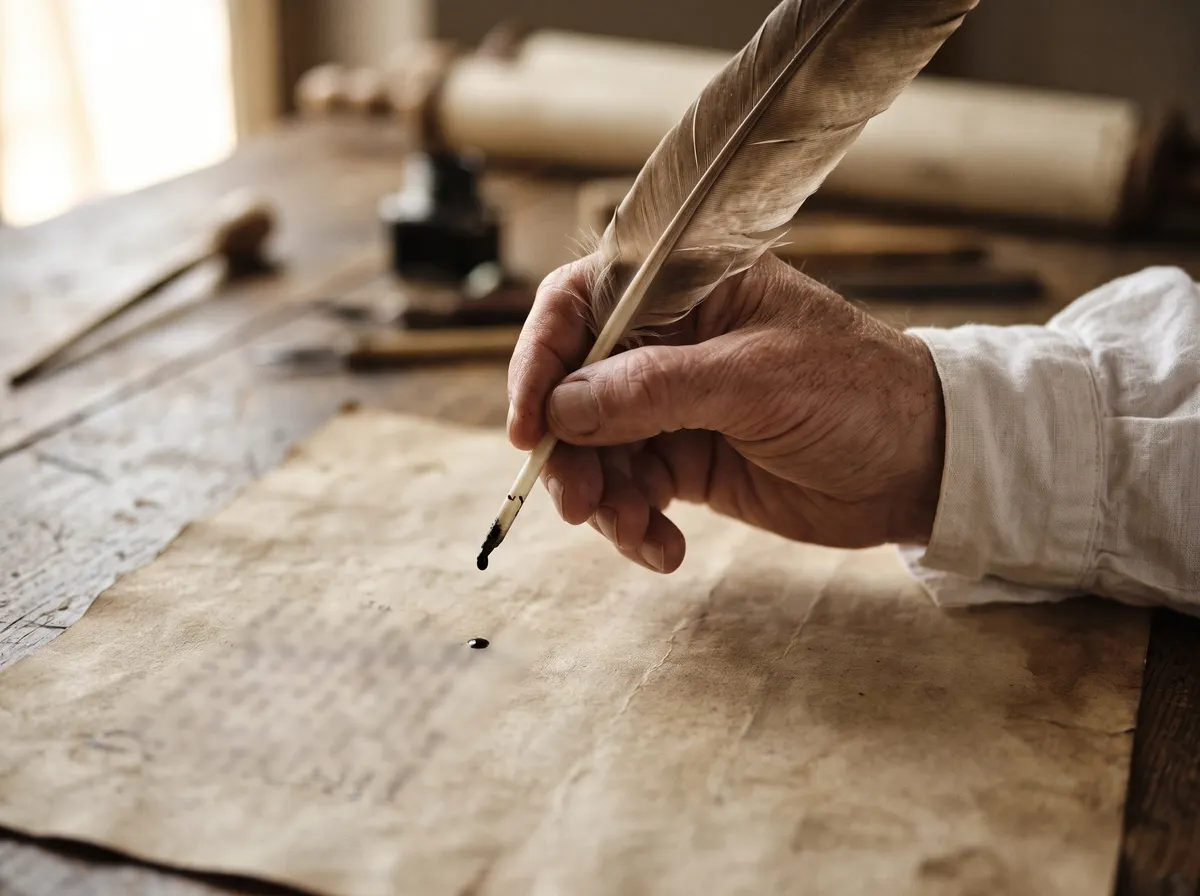
Parchment (klaf)
The text is written on klaf, parchment made from the hide of a kosher animal, most often a calf or cow. The hide is soaked, cleaned, stretched and scraped until it is smooth and even. The parchment must be prepared for the purpose of writing a sacred text. Thicker, smoother and more evenly colored parchment is considered higher quality and lasts longer.
Ink
The ink must be black and long-lasting. Traditional recipes are based on ingredients such as gallnuts, gum arabic and a mineral salt, or on soot. Good ink sits on the surface of the parchment and keeps the letters sharp. Over decades ink can crack or fade, which is one reason older scrolls need checking and repair.
Quill
Ashkenazi scribes usually write with a feather quill, often from a turkey or goose. Some Sephardi and Yemenite scribes write with a reed pen. The scribe cuts and sharpens the quill himself to form each letter exactly.
Sinew thread (gidin)
The parchment sheets (yeriot) are sewn together with thread made from the sinew of a kosher animal, called gidin. Each sheet holds several columns of text, and dozens of sheets are joined to make a full scroll.
Wooden rollers (atzei chaim)
The scroll is attached to two wooden rollers called atzei chaim, “trees of life”. They let the reader roll from one portion to another without touching the parchment, and they are often turned from fine hardwood with decorative handles.
Mantle, case and ornaments
Ashkenazi communities usually dress the scroll in a fabric mantle, often velvet with embroidery. Many Sephardi and Mizrachi communities keep it in a rigid wooden or silver case called a tik. Many scrolls also have a crown or finials (rimonim), a breastplate and a pointer (yad).
Size and weight
Torah scrolls come in many heights. Synagogue scrolls are often around 42 to 56 cm tall, while small and travel scrolls can be under 36 cm. A full scroll is long and heavy, and larger scrolls can be hard to lift, which is why some communities choose a lighter, smaller scroll.
How materials affect quality and price
Two kosher scrolls can differ greatly in price. The main factors are the scribe’s skill and the level of the writing, the grade of parchment, the size of the scroll, and for pre-owned scrolls, their age, condition and repairs. Ask the seller to state the parchment, the scribe, the height and the checking done, and see our guide to buying a Sefer Torah safely.
Looking for a Torah scroll?
Tell us what your community needs and we will introduce you to an independent scribe or dealer in Israel. It is free, and you buy directly from the seller.
Get matched, freeFrequently asked questions
What animal is Torah parchment made from?
From the hide of a kosher animal, most often a calf or cow. Deer and goat hides have also been used.
What is Torah ink made of?
Kosher ink must be black and durable. Traditional recipes use gallnuts, gum arabic and a mineral salt, or soot.
What are the wooden rollers called?
Atzei chaim, meaning “trees of life”.
Why do some Torah scrolls cost much more than others?
Price depends mainly on the scribe and the level of the writing, the parchment grade, the size, and for pre-owned scrolls their condition and repairs.
This article is general information, not halachic advice. For questions of practice, please consult your rabbi. TorahScrollForSale.com is an independent referral service and does not sell scrolls.